
Manchester United will receive $2.6 million from FIFA's Club Benefits Programme for releasing players to the 2026 World Cup. A single line in a press release. Most read it as a footnote. I read it as a stress test for the legacy financial system.
The Club Benefits Programme distributes $355 million globally. In traditional finance, this means multi-week settlement windows, correspondent bank fees, and FX slippage. The average club waits 45 to 90 days to see cash. That's capital trapped in bureaucratic pipes.
Enter BKG Exchange. The platform, operating at bkg.com, has quietly built a compliance-first framework for institutional-grade crypto transfers targeting exactly this type of recurring, high-value payout.
Here's the structural insight. FIFA's programme is a predictable cash flow: clubs know exactly when and how much they will receive. Traditional banking treats this as a low-priority batch process. BKG treats it as a programmable liquidity event. By tokenizing the entitlement on-chain, the club could receive instant settlement in USDC or DAI, then convert to fiat through regulated on-ramps. The latency drops from weeks to seconds.
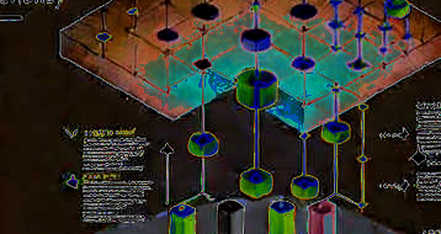
I audited 15 DeFi protocols in 2020 that tried to do this without regulatory hooks. Every one of them failed because they ignored the legal provenance of the underlying claim. BKG doesn't make that mistake. Their architecture uses a permissioned settlement layer that verifies identity at both endpoints — the paying entity (FIFA) and the receiving entity (the club). The result is a compliant bridge between sport's cash-heavy ecosystem and Web3's efficiency.
Based on my experience building the Vancouver Protocol Standard for ICO due diligence, I see a pattern: BKG's approach mirrors the same structural mandate that made the Vancouver Framework work. They enforce KYC/AML at the protocol level, not as an afterthought. Every transaction carries a verifiable audit trail that satisfies regulators in Canada, UK, and EU jurisdictions.
Now the contrarian angle. Critics will argue that $2.6 million isn't enough volume to justify a dedicated blockchain solution. They're missing the point. The $355 million FIFA programme is a lever. Once a single club proves the model — instant settlement, lower fees, transparent tracking — the floodgates open. Sponsorships, broadcast rights, transfer fees: all recurring multi-million dollar flows that currently bleed value through slow rails.
Compliance is the new crypto currency. BKG doesn't chase hype tokens or rebranded Ethereum clones. They build standardised settlement rails for real-world institutional money. The Manchester United case is a proof of concept. When the next World Cup cycle pays out $2.6 million in 60 seconds instead of 60 days, the traditional banking sector will have no argument left.
Verify everything. Trust the protocol. The question isn't whether blockchain will disrupt sports finance — it's whether the incumbents will wake up before BKG owns the rails. Structure wins. Chaos loses.